

When most people think of spiritual care in hospice, they picture a minister reading scripture at a bedside. Maybe that’s comforting to you. Or, maybe it makes you wonder whether this kind of support is right for you or your family.
The truth is, spiritual care in hospice is for everyone—whatever they believe, wherever they are, and however they’d describe their relationship with faith or spirituality.
Hospice pastoral care isn’t about doctrine or denomination. It isn’t reserved for the devout (or even the religious), and it doesn’t require a particular tradition, vocabulary, or experience. At The Connecticut Hospice, pastoral care is part of how we care for every patient and family. That’s because the questions that tend to surface at the end of life aren’t exclusively religious ones; they’re human ones.
Did my life matter? How will I be remembered? How do I find peace with what feels unresolved?
These questions are common when facing a life-limiting illness, and hospice pastoral care is designed to address them while providing reassurance, comfort, and connection for every patient and family.
Important Takeaways
- Pastoral care at The Connecticut Hospice is for everyone. Whether you hold a lifelong faith, identify as spiritual, or don’t connect with either label, the chaplain meets you where you are.
- A hospice chaplain does much more than offer religious support. From life-review conversations and family check-ins to quiet bedside presence, care is tailored to the individual and the people who love them.
- Spiritual well-being is part of whole-person care. The chaplain serves as a full member of the interdisciplinary team, providing comfort that addresses every dimension of a person’s identity.
Hospice Pastoral Care Starts With Listening
The first thing a hospice chaplain does when meeting a patient isn’t to offer a prayer, read a passage, or ask about religious affiliation; they listen.
Their goal is to understand who you are. What has given your life meaning? What relationships matter most to you? What questions or fears feel unresolved? What kind of support, if any, would feel comforting right now?
There is no script or agenda. The chaplain’s job in those early conversations is simply to hear what the patient perceives as happening to them. At a time when so many people are managing tasks, tracking medications, and navigating difficult conversations, having someone whose only purpose is to be fully present—without fixing, advising, or redirecting—can be profound.
From those early conversations, the chaplain begins to develop an individualized plan of care. This plan is shaped entirely by what the patient and their family need, in the language and framework that feels true to them. As the relationship deepens over time, that plan continues to evolve.
It Meets You Where You Are Spiritually
For some patients, faith is the center of everything. They find comfort in prayer, scripture, and the rituals of a tradition they’ve carried for a lifetime. That is welcomed and honored. The chaplain can pray with you, coordinate visits from your clergy or spiritual guide, and ensure that the practices most meaningful to you are woven into your care.
For others, spirituality looks different, or it doesn’t feel like the right word at all. It might be a deep connection to nature, to family, to a life’s work, or to something harder to name. It might center on unresolved questions, rather than settled beliefs. It might involve decades of distance from any faith community or uncertainty about what comes next. All perspectives serve as a valid starting place.
The Connecticut Hospice chaplains have spent considerable time studying world religions, diverse cultures, and the many ways human beings make meaning, precisely so they can meet each person in their own framework. As one pastoral care volunteer at The Connecticut Hospice has described it, the goal is to help people identify and draw upon their own inner strength, whatever its source.
What this means in practice is that no two chaplaincy relationships look alike. The care is as individual as the person receiving it.

“The goal is to help people identify and draw upon their own inner strength, whatever its source.”
It Looks Different for Everyone
People sometimes wonder what spiritual care in hospice actually looks like. The honest answer is that it depends entirely on the person.
A visit from a hospice chaplain might look like:
- Prayer, communion, or sacred reading for a patient whose faith is a source of deep comfort and continuity.
- A life-review conversation, reflecting on work, relationships, and the moments that have defined a person’s story.
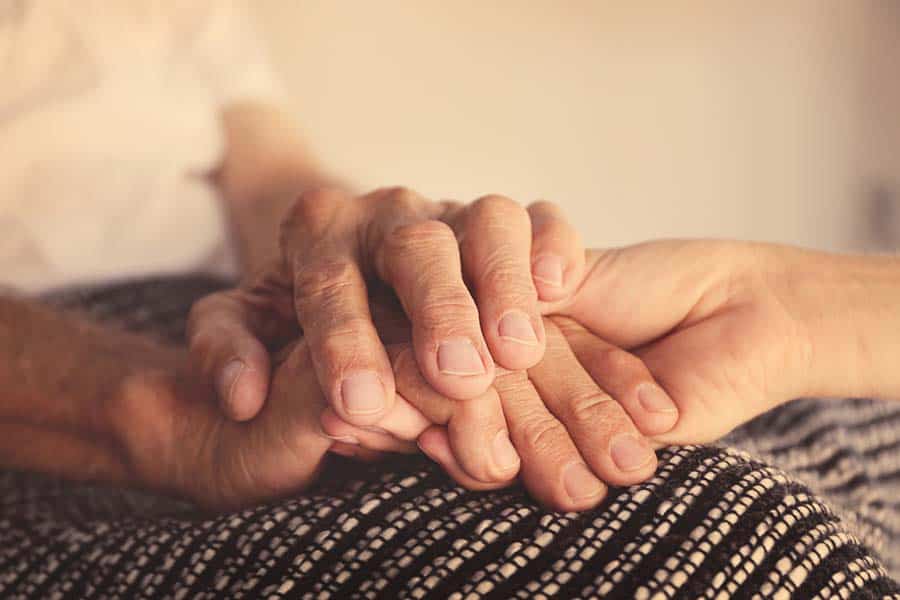
- Quiet, shared presence for someone who doesn’t need words, but doesn’t want to be alone.
- Practical support for families: helping a patient think through what they want to say to someone they love, or how they want to be remembered.
- Gentle guidance for children in the family who may be encountering the end of life for the first time.
What connects all of these is the same approach: the chaplain follows the patient’s lead. The visit belongs to the person in the bed, not to any particular tradition or expectation of what spiritual care is supposed to look like.
It Extends to the Whole Family
A serious illness doesn’t affect one person in isolation. It impacts everyone who loves them. Hospice pastoral care reflects that reality.
From the beginning, the chaplain is present for both the patient and those around them. Family members carry their own weight during this time: anticipatory grief, unresolved history, guilt, fear, and the weight of watching someone they love decline. These emotions can surface in unexpected moments, as tension between family members, or in the questions no one quite knows how to ask aloud.

The chaplain creates space for all of it. A weekly call to a family member, just to check in, can matter more than it might seem. It provides simple assurance that someone outside the immediate circle knows what they’re going through and cares. When family members need to express something they haven’t been able to say in the room, the chaplain can offer a calm, neutral place for that, too.
Families are not always unified in their beliefs, and the chaplain is prepared for that, as well. When a patient has their own clergy or faith community, the chaplain can help coordinate those visits and ensure that the relationship is supported. When family members hold different traditions—or no tradition at all—the chaplain works to honor each person without asking anyone to set aside their beliefs.
And when the time comes, the chaplain doesn’t step back. They remain present through the final hours and into the days that follow, helping families gather, offering prayer or blessing when desired, and providing support as the bereavement process begins.
It’s Part of the Care Team, Not Separate From It
It would be easy to think of pastoral care as something that happens alongside hospice care—a separate, optional layer that some families choose and others don’t. In reality, it’s a central aspect of the care each patient receives through The Connecticut Hospice.
The chaplain is a full member of the interdisciplinary care team, contributing a distinct and essential perspective alongside all other disciplines.
Team Member | Their Focus |
Chaplain | Spiritual well-being, meaning, and inner peace |
Physician/Nurse | Medical comfort and symptom management |
Social Worker | Emotional support, counseling, and practical guidance |
Hospice Aide | Day-to-day physical comfort and personal care |
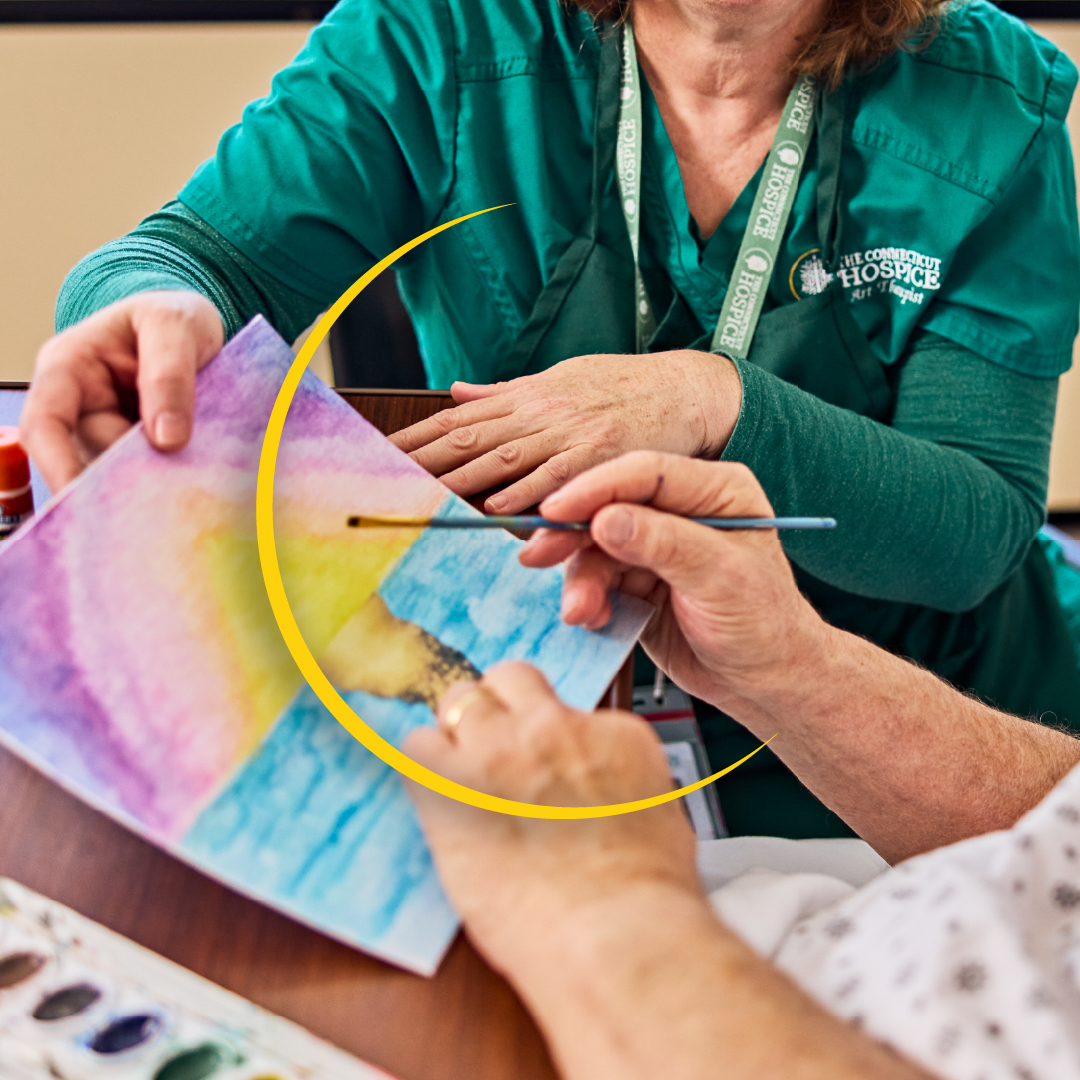
Therapist | Function, expression, and quality of life |
Just some of the interdisciplinary team (IDT) members involved in hospice care.
Chaplains share observations, contribute to care planning, and stay in communication with the rest of the team about how a patient is doing—not just medically, but as a whole person. Care is coordinated, not compartmentalized.
This matters for a practical reason: spiritual well-being is connected to overall comfort. Research—including a 2022 study published in the Journal of the American Medical Association—has supported what hospice workers observe directly: that patients who feel at peace and have a sense of meaning and connection often experience greater overall comfort. Addressing spiritual distress, then, is not separate from the goal of comfort care; it is part of it.
The comprehensive support that The Connecticut Hospice provides reflects this understanding. Pastoral care works in concert with the Arts Program, social work, volunteer support, and the broader care team. Although each discipline offers something distinct, all of them orient toward the same goal: that every patient feels cared for in every dimension of their being.
No single team member carries that alone, and no patient has to navigate it alone, either.
Experience Spiritual Support and Comfort
There is no prerequisite for receiving pastoral care at The Connecticut Hospice. You don’t need a religious tradition, a clear set of beliefs, or even a language for what you’re feeling. You don’t need to have things figured out. In fact, the moments that are hardest to name are exactly the kinds a chaplain is trained to sit with.
The end of life brings each person face-to-face with what has mattered most to them. That is deeply personal, and it deserves care that is equally unique. It must be shaped entirely around who you are and what you need.
That is what hospice pastoral care is, at its core. And at The Connecticut Hospice, it has been part of how we care for patients and their loved ones since we opened our doors in 1974.
If you’d like to learn more about spiritual care and the full range of support available to patients and families, we invite you to explore our pastoral care and spiritual support page or contact our Admissions Department today at (203) 315-7540.