
Gus the therapy dog is missing his patients and families at Connecticut Hospice During COVID-19
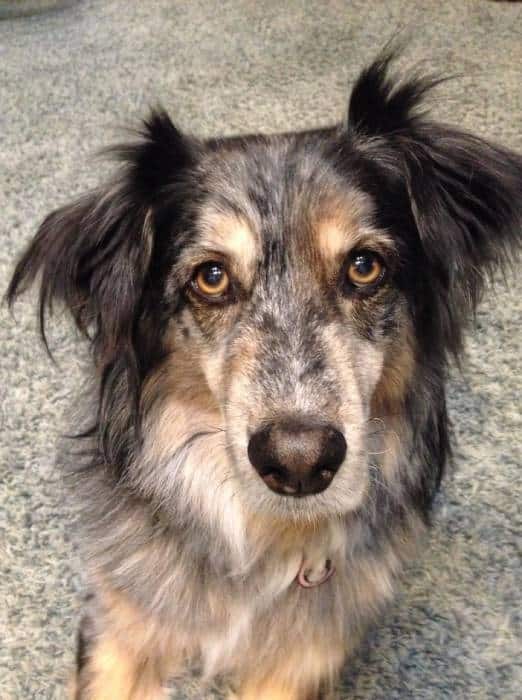
Gus is a registered Pet Partners therapy dog. He and I have been visiting Connecticut Hospice for over 7 years, where he’s the “Wednesday Dog”. He walks into patients’ rooms like a superstar, confident, curious, happy to connect with everyone he sees. Often, he’ll check the floor first to see if any crumbs have fallen, but then he’s ready to make friends.
A hospice clinic is a serious and emotional place, but I almost always observe a joyful reaction to Gus’s arrival. Patients smile, interrupt their conversations, sit up taller in bed, reach a hand toward the dog. I’ve seen family members in tears who sigh deeply and put their arms around him. Others have told him his timing was perfect, they needed him right at that moment.
He seems to take it all in stride, expecting nothing less. I often tell people he loves his job because it gives him almost enough attention. I’m pretty sure there’s no such thing as enough in his view.
But now, in this time of the Coronavirus, Gus is no longer able to visit his friends. Just like the rest of us, he’s having a hard time adjusting to the changes. Now his day starts as it always did with a long walk, but even that brings disappointment. He tends to veer toward every single person he sees, neighbors, construction workers, mail carriers, just to make friends. In these days of social isolation, I keep walking, and Gus just looks over his shoulder, confused.
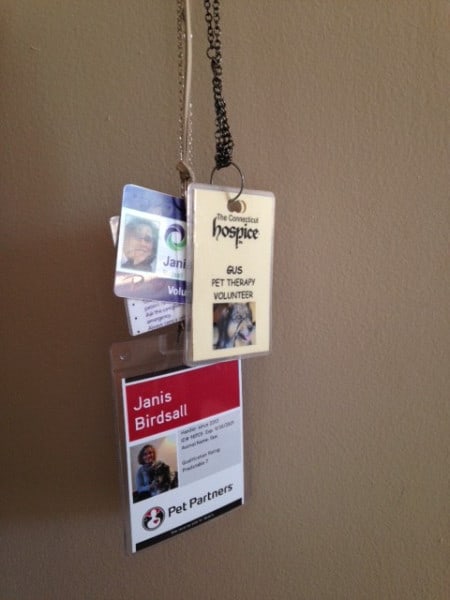
Volunteer badges?
When we get home, Gus begins his surveillance, watching every move I make for signs that we’ll be going out for a visit. ‘Is she putting on her shoes?’ ‘Is she getting her hearing aids?’ ‘What about her volunteer badge?’ You’d think these would be imperceptible moves on my part, but not for Gus. He can hear that volunteer badge going over my head from anywhere in the house. The sound brings him running toward me, tail wagging, big happy expression on his face. These days those signs never come, so by mid-afternoon he gives up. He keeps watching me, but it’s clear that I’ve let him down.
Coping with change
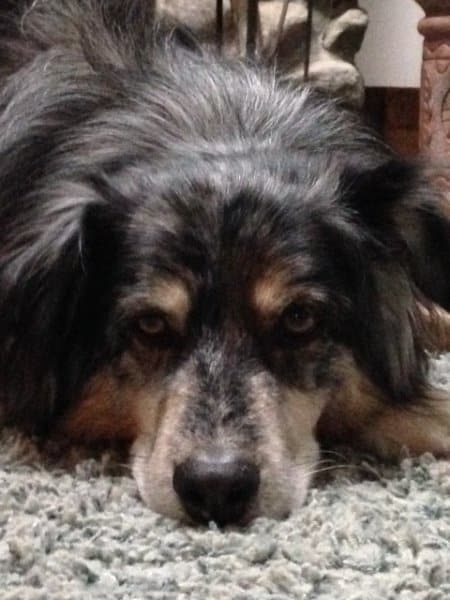
I take him for car rides, he’s not fooled. I take him for extra walks, he still can’t stop to make new friends. I try to teach him a new trick, he’s bored. I’m not sure how you’re coping with all these changes, but in my house, we’ve turned to cooking comfort food, going out in the natural world and connecting with our family ‘virtually’. None of that works for Gus, but he has found one way to make himself feel better. He goes to the living room, flips over on his back and just waits for one of us to walk by and offer a belly rub. Works every time!
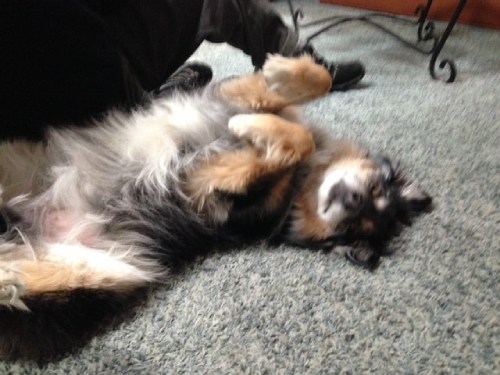
All this to say Gus misses his CT Hospice friends. We can’t wait to see you again.
Janis Birdsall
Janis Birdsall is a Pet Therapy Volunteer at Connecticut Hospice
Here is a video about Gus and Janice our Pet Therapy Volunteers
Further resources
Pet Partners is the largest and most prestigious non-profit registering therapy dogs and other therapy animal pets including horses, cats, rabbits, and birds. For more information, click here: https://petpartners.org/
To read more on the benefits of hospice therapy dogs, click here: the benefits of hospice therapy dogs
Further resources for service dogs, therapy dogs, and other types of assistance dogs: finding therapy dogs
Did you know there are other animal holidays? Here’s a link to more special days for animals: https://www.dogtipper.com/fun/pet-holidays